Machinery Moving
Request a Job Quote
Submit a Quote Form and a Southway Sales Representative will be in contact with you as soon as possible.
GET A QUOTEMachinery Moving Services
Moving heavy machinery requires careful coordination, specialized equipment, and a detailed understanding of how each piece of equipment needs to be handled. Industrial machinery is often heavy, sensitive, and difficult to move using standard lifting methods, especially when projects involve restricted spaces, facility limitations, or precise placement requirements.
At Southway Crane & Rigging, we provide machinery moving services for equipment relocation, installation, removal, and positioning projects. Our team uses advanced lifting equipment, careful planning, and proven moving techniques to transport and place machinery safely.
Every project is reviewed based on the machinery specifications, facility layout, access points, floor conditions, and final placement needs. Whether equipment needs to be moved across a facility, transported to another location, or installed as part of a larger project, we develop a solution based on the specific requirements of the move.

Machinery Moving Applications
Machinery moving services are used when heavy equipment needs to be relocated, installed, or repositioned with accuracy and minimal disruption. These projects often require specialized equipment and careful coordination to protect both the machinery and surrounding facility.
Our machinery moving services support applications such as:
- + Industrial equipment relocation within existing facilities or between locations
- + Manufacturing machinery installation and production line changes
- + Heavy equipment removal during facility upgrades or replacements
- + Equipment loading, unloading, and placement for new installations
- + Machinery positioning in areas with restricted access or limited clearance
Before beginning a move, we review the equipment details, site requirements, travel path, and any potential challenges to determine the safest and most effective approach.


Specialty Forklifts
Moving large industrial machinery often requires lifting equipment designed for greater capacity, control, and maneuverability.
Our fleet includes Versa-Lift forklifts, Hoist forklifts, and TriLifters with lifting capacities up to 75 tons. These specialty forklifts allow us to move heavy equipment in environments where space is limited or traditional lifting equipment may not be practical.
They are commonly used for machinery installation, equipment replacement, plant relocation, and projects that require precise movement inside industrial facilities.
Standard Forklifts & Telehandlers
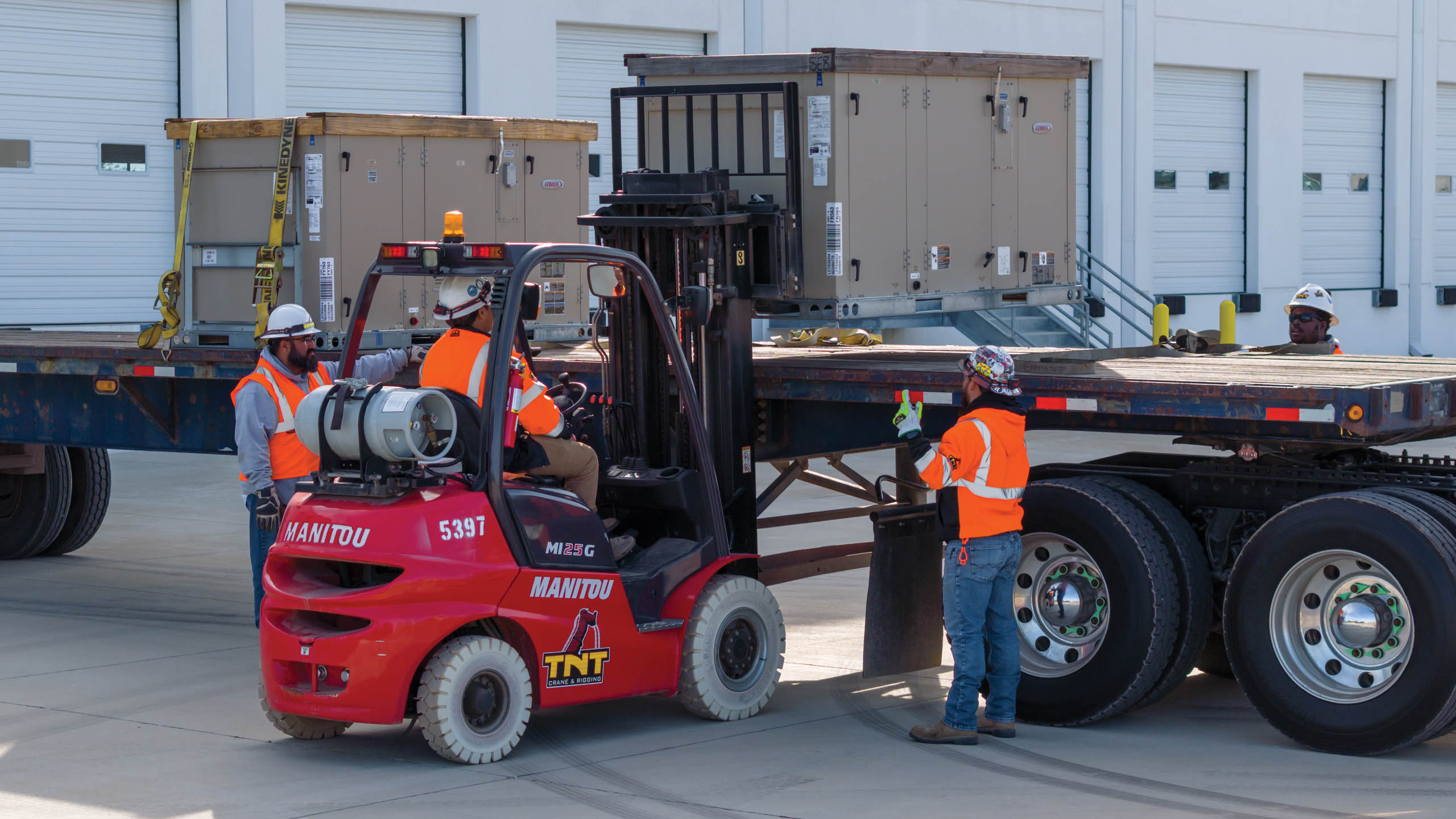
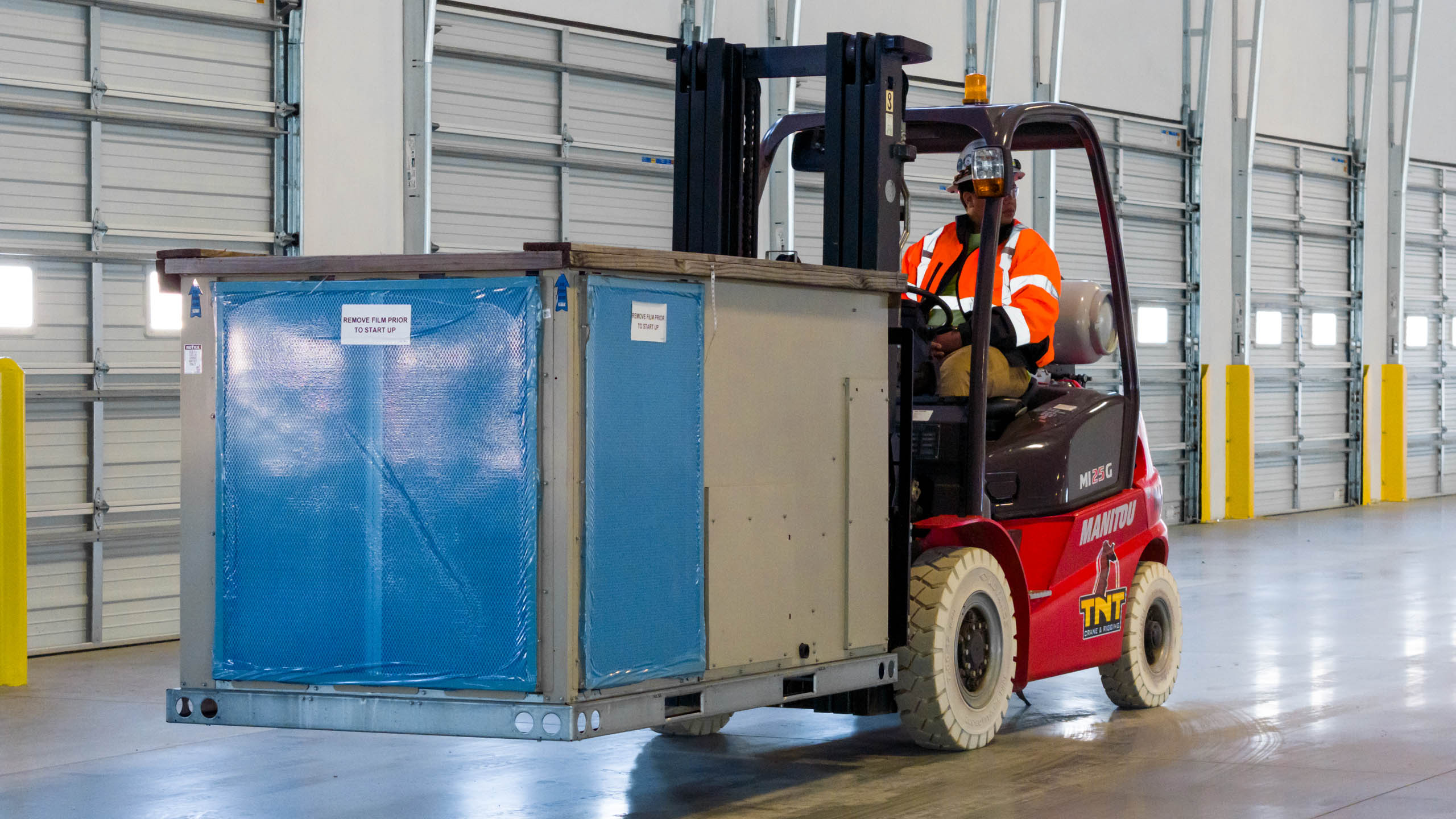
For material handling, equipment placement, and general lifting requirements, we provide forklifts and telehandlers from manufacturers such as Manitou, Toyota, Clark, and Hyster.
With lifting capacities ranging from 2,500 pounds to 17,000 pounds, these machines provide dependable support for moving smaller machinery, transporting components, loading equipment, and assisting with larger relocation projects.
The equipment selected for each project depends on factors such as weight, reach requirements, facility conditions, and the type of machinery being moved.

Gantry Lift Systems
Gantry lift systems provide a powerful solution for projects where traditional cranes are not the best option. These systems are especially useful for indoor machinery moves, areas with overhead restrictions, and facilities with limited crane access.
Our gantry lift systems can be configured to handle loads up to 1,178 tons, providing the strength and control required for large equipment moves.
These systems are often used for machinery installation, equipment replacement, and complex relocation projects where controlled lifting and placement are essential.

Sliding Systems
When heavy equipment needs to move horizontally through confined areas, sliding systems provide a controlled and efficient solution.
Our sliding systems can handle loads up to 500 tons and allow large machinery to be moved through areas where cranes, forklifts, or other equipment may have limited access.
These systems are commonly used in industrial environments where machinery must be positioned accurately while working around existing structures or equipment.
Hydraulic Jacks
Hydraulic jacks provide controlled lifting capabilities for raising, positioning, and preparing machinery for movement.
Our hydraulic jacks include individual units capable of handling up to 103 tons each. They can be used independently or combined with other lifting systems, depending on the size and complexity of the project.
Hydraulic jacking solutions are commonly used during machinery installation, leveling, alignment, and relocation projects that require precise height adjustments.
Machinery Skates
Machinery skates allow heavy equipment to be moved smoothly across suitable surfaces while maintaining stability and control.
We provide machinery skates with capacities ranging from 6,000 to 100,000 pounds per skate. Available in rigid and multidirectional configurations, these systems allow equipment to be moved according to facility layouts and project requirements.
Machinery skates are commonly used inside manufacturing facilities, warehouses, and industrial spaces where equipment needs to be transported without larger lifting equipment.
Cantilever Bars
Some lifting projects require additional reach, stability, or access due to surrounding obstacles or challenging load conditions.
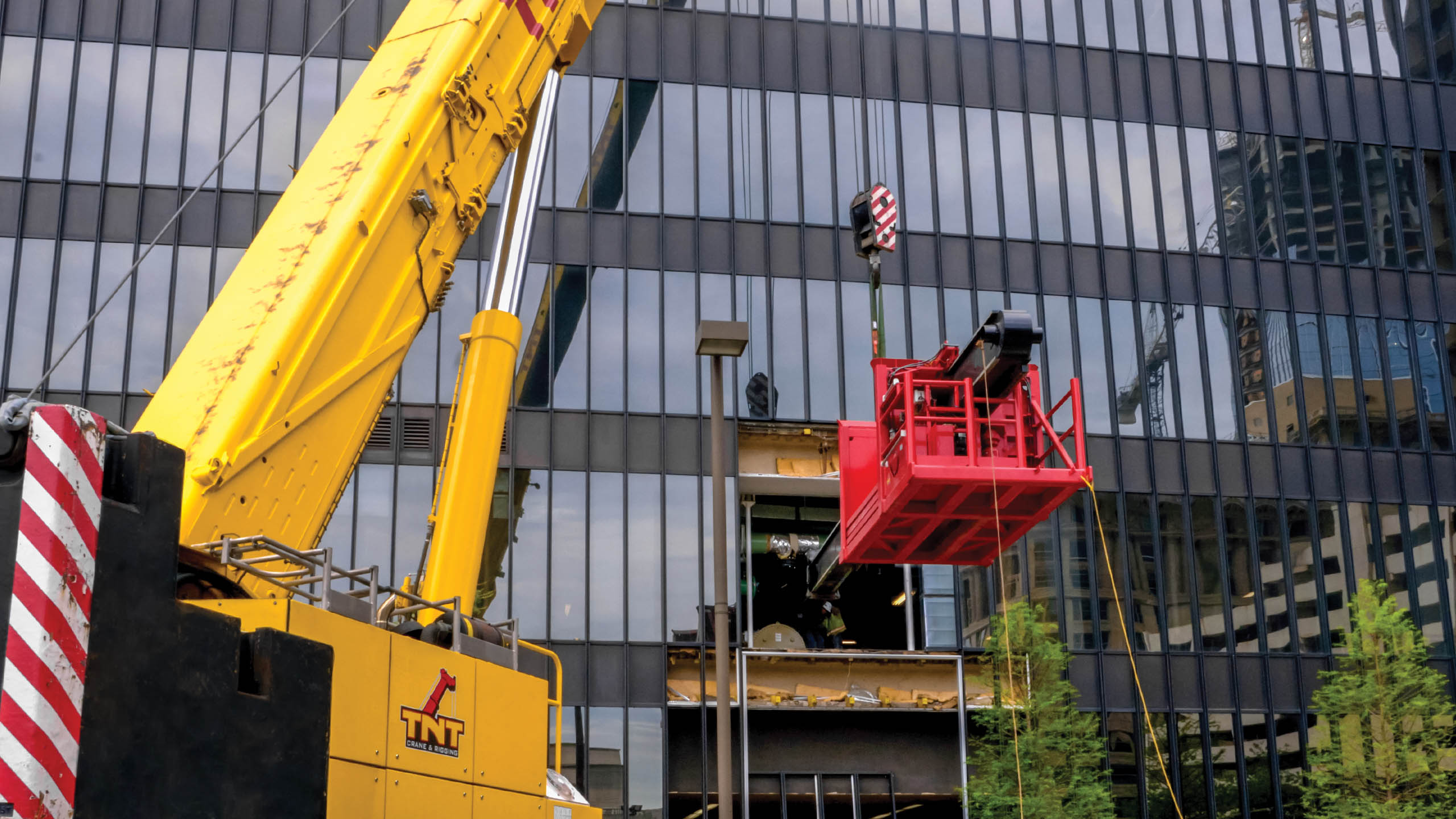
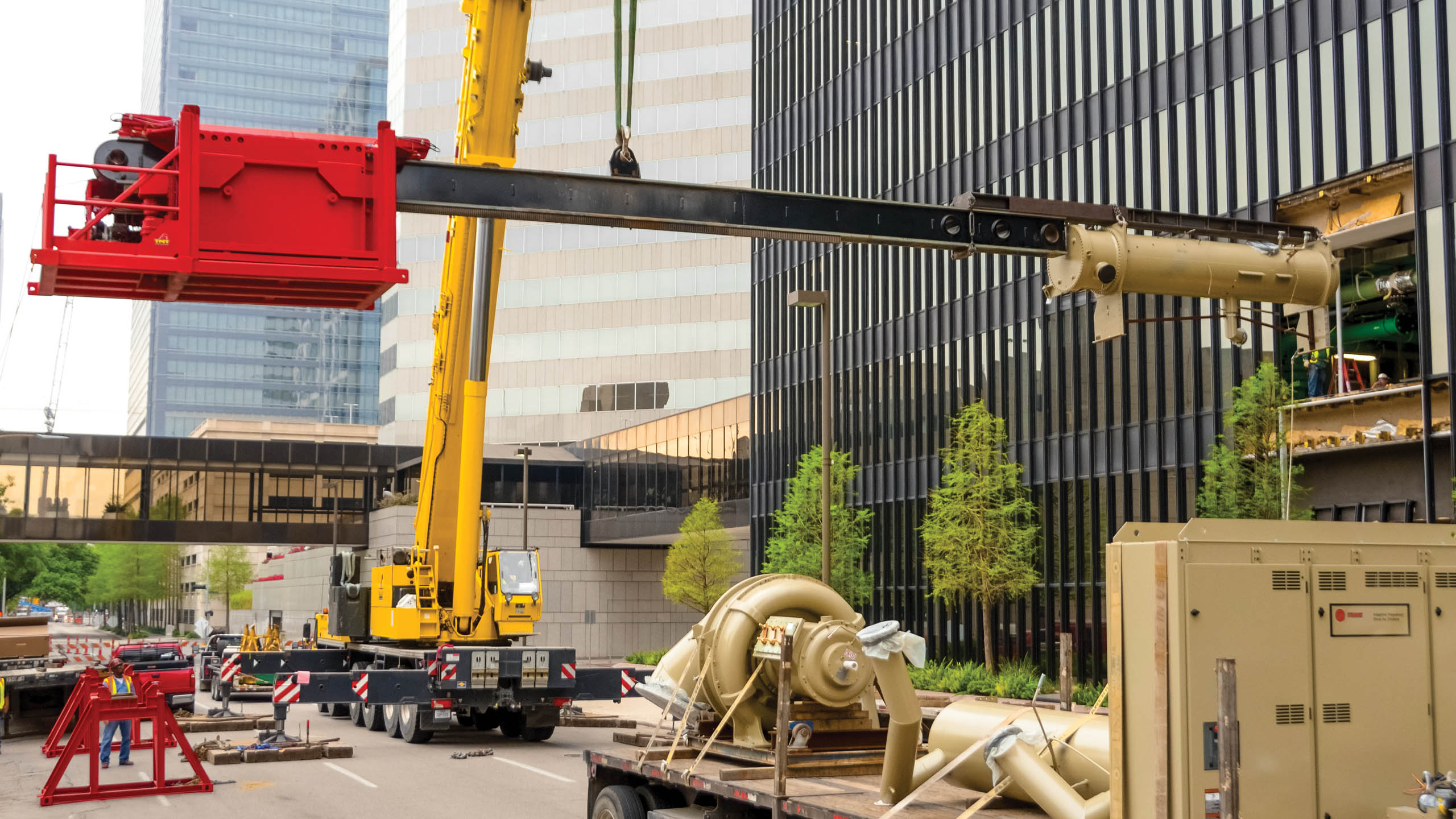
We provide cantilever bars with 10 ton, 30 ton, and 50 ton rated capacities. These tools help improve balance and load control when moving equipment in restricted or difficult areas.
By supporting better weight distribution, cantilever bars provide another solution for complex machinery moving projects that require customized lifting methods.
Our Machinery Moving Process
Every machinery moving project starts with understanding the equipment and jobsite requirements. Our team reviews important details such as machinery size, weight, access limitations, floor conditions, and final placement requirements.
After evaluating the project, we determine the right equipment and moving strategy. Depending on the scope of work, machinery moving services may include equipment removal, lifting, transportation coordination, placement, installation support, and experienced operators.
Customers can expect communication throughout the process, from initial planning to final positioning. Our goal is to create a moving plan that supports safe equipment handling while helping reduce unnecessary downtime.
Equipment Library
Technical Specifications | Crane Capabilities | Load Charts
Why Choose Southway for Machinery Moving?
Experienced Team
Our skilled operators and rigging specialists ensure your equipment is moved safely and efficiently.
Specialized Equipment
We utilize industry-leading tools and machinery to handle even the most challenging relocations.
Safety First
Every machinery move follows strict safety protocols to protect personnel and equipment.
Minimized Downtime
Our efficient processes reduce operational disruptions, getting your machinery into place quickly.
Frequently Asked Questions
How long does machinery relocation typically take?
Machinery relocation typically takes 2 to 10 days depending on equipment complexity, distance, and site conditions. Simple in-facility moves may be completed in 1 to 3 days, while complex relocations involving disassembly or long-distance transport can extend several weeks. At Southway Crane & Rigging, we develop detailed schedules during planning to ensure minimal disruption to your operations.
What floor load capacity is needed for machinery moving?
Industrial facilities typically require floor load capacities between 150 and 500 pounds per square foot for machinery moving operations. Manufacturing facilities with heavy machinery often need 300 to 500 pounds per square foot, while warehouses may function with 150 to 250 pounds per square foot. We conduct thorough site assessments before every project to evaluate floor capacity and ensure your facility can safely support equipment during and after installation.
When should you use a gantry system versus a crane?
Gantry systems are ideal when traditional cranes cannot access work areas due to confined spaces, low overhead clearance, or building restrictions. Hydraulic gantries lift from ground level in tight quarters and can operate in wind speeds up to four times higher than cranes. We evaluate your site conditions and equipment requirements to recommend the most efficient lifting solution for your project.
Do I need permits for moving equipment on-site?
On-site moves within private property generally do not require transportation permits, though you may need building permits or utility work authorizations depending on local jurisdiction. If equipment moves onto public roads, even briefly, you will need oversize or overweight load permits. Southway Crane & Rigging manages all permit requirements and regulatory compliance for your machinery moving projects.
How much downtime should I expect during relocation?
Most machinery relocations require complete equipment shutdown, with typical downtime ranging from 1 to 3 days for straightforward projects. Strategic planning can minimize production impact through phased relocations or scheduling moves during maintenance windows. We work closely with your operations team to develop schedules that reduce downtime and maintain production targets.
Can machinery be moved without disassembly?
Many machines can be moved intact when site conditions permit, though larger equipment often requires partial disassembly for safe transport through doorways or onto trailers. Our experienced rigging team evaluates each situation during pre-move site surveys, following manufacturer guidelines to determine whether intact moving or strategic disassembly provides the safest approach.
What insurance is required for machinery moving?
Professional machinery moving requires riggers liability insurance, which covers equipment during lifting and transport, with coverage limits typically matching equipment value. Standard general liability policies exclude this coverage. Southway Crane & Rigging carries comprehensive riggers liability, general liability, commercial auto, and workers compensation, providing complete protection throughout your project.
How do I prepare a facility for machinery installation?
Facility preparation includes verifying floor load capacity, ensuring electrical power and utilities meet machinery specifications, and confirming access routes provide sufficient clearance. Critical steps include clearing the installation area, reinforcing floors if needed, and coordinating utility shutdowns. We provide detailed preparation checklists during planning to prevent delays and ensure seamless installation.
Are machinery moving services available for small spaces?
Yes, Southway Crane & Rigging specializes in moving equipment through confined spaces using compact hydraulic gantries, specialized skate systems, and precision rigging techniques. We utilize narrow-profile lifts, modular systems, and remote-controlled movers to navigate challenging environments including narrow corridors and low-ceiling facilities. We conduct thorough site assessments to develop customized solutions for even the most restrictive spaces.